Elementary teachers manage countless responsibilities every day—from planning engaging lessons and tracking student progress to communicating with parents and organizing classroom activities. A thoughtfully designed teacher planner can make all the difference, helping you stay organized, reduce stress, and focus more on what matters most: teaching your students.
If you’re looking for the perfect teacher planner layout, here are some of the best page designs and organizational ideas specifically tailored for elementary educators.
Why Planner Layout Matters
A teacher planner isn’t just a notebook—it’s your daily command center. The right layout allows you to quickly access lesson plans, classroom information, and important schedules without wasting valuable time.
An effective planner layout should help you:
- Plan lessons efficiently
- Stay on top of deadlines
- Organize student information
- Track classroom progress
- Manage meetings and communication
- Reduce paperwork and clutter
1. Year-at-a-Glance Layout
Start your planner with a yearly calendar that provides a complete overview of the school year.
Include:
- School holidays
- Teacher workdays
- Testing periods
- Parent-teacher conferences
- Report card dates
- School events
- Personal appointments
This layout helps you plan ahead and avoid scheduling conflicts.
2. Monthly Planning Pages
Monthly spreads give you a broad view of upcoming events and deadlines.
Use them to record:
- Curriculum milestones
- Special classroom activities
- Field trips
- Birthdays
- School assemblies
- Important reminders
Leave extra space for monthly goals and priorities.
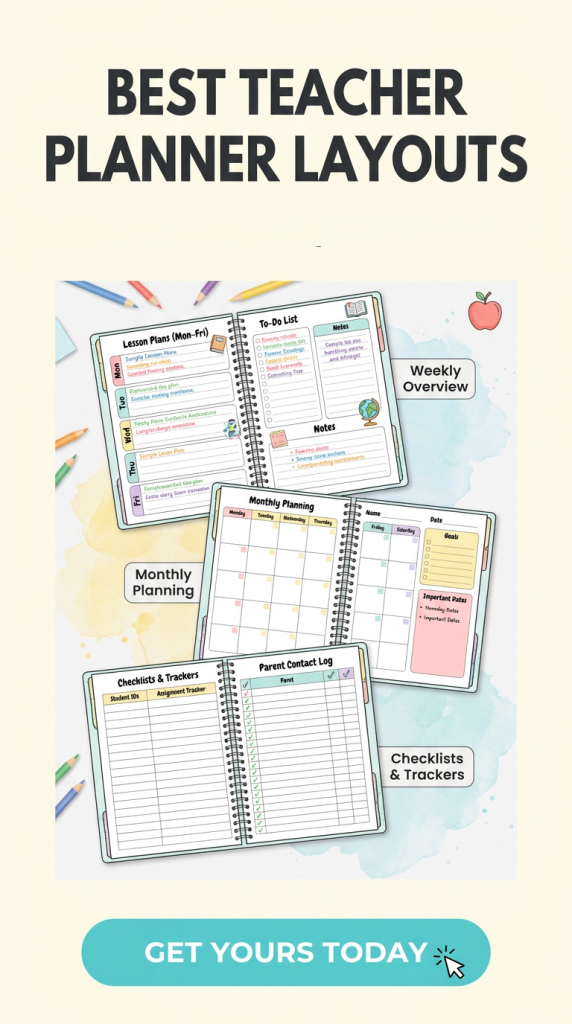
3. Weekly Lesson Planning Layout
The weekly planning spread is one of the most important sections of any teacher planner.
A practical layout includes columns for:
- Monday through Friday
- Subject or time block
- Learning objectives
- Classroom activities
- Materials needed
- Homework assignments
- Notes and reminders
Many elementary teachers prefer horizontal layouts for detailed lesson planning, while vertical layouts work well for scheduling by subject or class period.
4. Daily Planning Pages
For teachers who like detailed organization, daily pages provide room to record:
- Daily schedule
- Lesson objectives
- Small-group instruction
- Classroom reminders
- To-do lists
- Student observations
- End-of-day reflections
Daily layouts are especially useful during busy weeks or when teaching multiple subjects.
5. Curriculum Planning Layout
A curriculum planning section helps organize long-term instruction.
Include:
- Units of study
- Standards covered
- Essential questions
- Assessment dates
- Resources
- Project timelines
Planning your curriculum in advance keeps lessons aligned with educational goals throughout the year.
6. Student Information Pages
Elementary teachers often need quick access to student details.
Your planner should include space for:
- Class roster
- Student birthdays
- Parent or guardian contact information
- Emergency contacts
- Learning accommodations
- Allergy information
- Seating charts
Remember to keep sensitive student information secure and follow your school’s privacy guidelines.
7. Attendance and Grade Tracking Layout
Instead of searching through multiple documents, dedicate pages for attendance and grades.
Track:
- Daily attendance
- Homework completion
- Quiz scores
- Test grades
- Reading levels
- Participation
- Academic progress
Keeping this information together makes grading and reporting much easier.
8. Parent Communication Log
Strong communication with families supports student success.
Use a dedicated layout to record:
- Date of contact
- Parent name
- Method of communication
- Discussion summary
- Follow-up actions
Having a written record is helpful during conferences and future conversations.
9. Classroom Management Pages
Behavior tracking becomes much easier with organized planner pages.
Include sections for:
- Positive behavior notes
- Classroom expectations
- Behavior interventions
- Reward systems
- Individual student goals
These records help identify patterns and celebrate student growth.
10. Assessment Tracker
Monitor student learning throughout the school year with an assessment layout.
Record:
- Assessment dates
- Skills assessed
- Student performance
- Areas for improvement
- Intervention plans
Reviewing assessment data regularly helps guide future lesson planning.
11. Meeting Notes Layout
Teachers attend many meetings throughout the year.
Reserve several pages for:
- Staff meetings
- Grade-level planning
- Professional development
- Individual education plan (IEP) meetings
- Parent conferences
Include action items so important tasks don’t get overlooked.
12. Classroom Supply and Budget Tracker
Managing classroom supplies becomes easier when expenses are organized.
Track:
- Supply purchases
- Classroom donations
- Budget allocations
- Wish lists
- Reimbursements
This layout helps you stay within budget while planning future purchases.
13. Notes and Brainstorming Pages
Every teacher has great ideas that appear unexpectedly.
Leave several blank pages for:
- Lesson ideas
- Classroom decoration inspiration
- Book recommendations
- Teaching strategies
- Activity ideas
- Professional development notes
Having one place for creative thinking keeps inspiration organized.
14. Reflection Pages
Reflection is an important part of professional growth.
At the end of each week, consider:
- Which lessons worked best?
- Which students need additional support?
- What classroom routines could improve?
- What should you change next week?
Even a few minutes of reflection can lead to better teaching practices over time.
Tips for Choosing the Right Teacher Planner Layout
When selecting a planner, look for layouts that:
- Match your teaching style
- Offer enough writing space
- Include both monthly and weekly planning pages
- Have durable binding and quality paper
- Provide room for notes and customization
- Fit comfortably in your teacher bag or desk
The best planner is one you’ll use consistently throughout the school year.
Final Thoughts
The right teacher planner layout can simplify your daily routine and make classroom management far less overwhelming. Whether you prefer detailed daily pages or streamlined weekly spreads, choosing a layout that fits your workflow will help you stay organized, prepared, and confident throughout the school year.
A well-organized planner isn’t just about keeping track of dates—it’s a powerful tool that supports effective teaching, better classroom organization, and a more enjoyable school year for both teachers and students.